
Public Transport
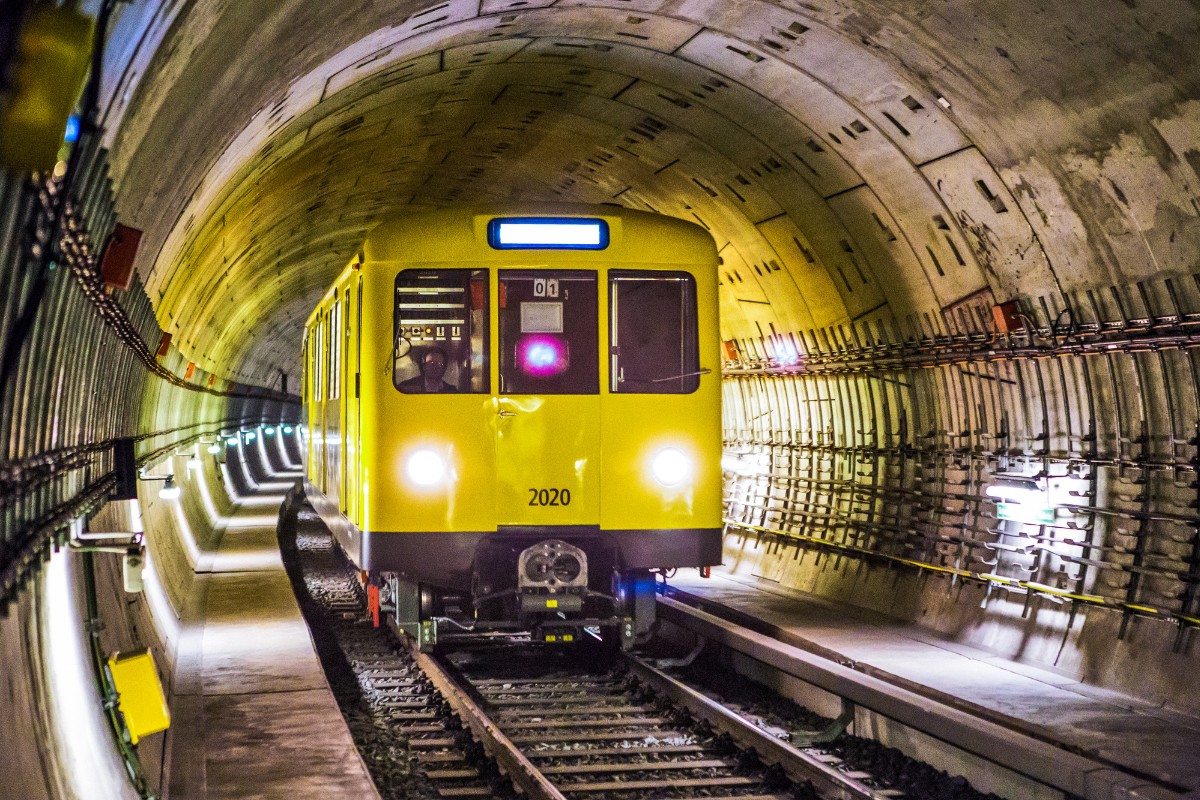

1 Rockfall Detection Using Existing Telecommunication Optical Fiber (Co-authored Paper with Central Japan Railway Company)
- ✔︎ In simulated rockfall tests on an artificial slope, rocks weighing 4–52 kg were dropped, and vibrations associated with all rockfalls were detected using the NBX-S4100 (DAS)
- ✔︎ Frequency analysis and AI-based anomaly detection demonstrated the potential for automatic rockfall detection and differentiation from other vibration events
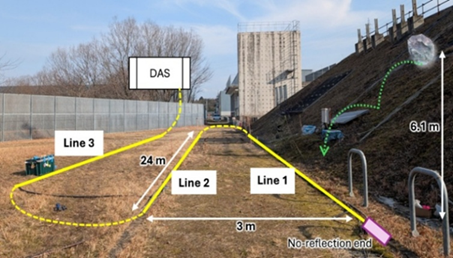
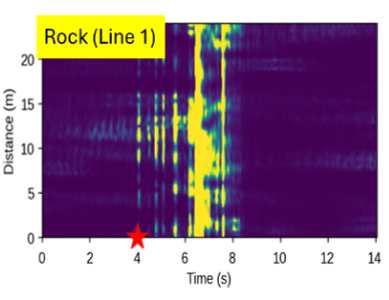
This study investigated the applicability of existing telecommunication optical fiber installed along railway lines for rockfall detection. Rocks weighing 4–52 kg were dropped on an artificial slope, and distributed vibration measurements were performed using the NBX-S4100 (DAS). Under the test conditions, vibrations associated with all rockfalls were successfully detected, and the temporal and spatial changes corresponding to the movement and arrival of the rocks were continuously visualized.
Analysis of the acquired data revealed differences in frequency components below 100 Hz between rockfalls and other vibration events, such as walking. In addition, an autoencoder trained on normal background vibration data was applied to detect vibrations other than background noise as anomalies. These results demonstrated the potential of combining existing telecommunication optical fiber with DAS for rockfall detection systems along railway lines.
Source: Proceedings of the Railway Engineering Symposium, Vol. 30, No. 1, pp. 196–203, 2026,© Japan Society of Civil Engineers
2Real-Time Anomaly Detection Using DAS and Machine Learning
- ✔︎ Detection of anomalous vibrations caused by rockfalls and human activity by combining DAS with unsupervised machine learning
- ✔︎ An anomaly detection rate of more than 98% and a low false-positive rate achieved using only normal background noise for training
This case demonstrates the detection of anomalous vibrations around an optical fiber by combining distributed acoustic sensing (DAS) with machine learning. An optical fiber installed on the ground surface was connected to the NBX-S4100 (DAS), and vibrations caused by rockfalls, walking, and jumping were measured in addition to normal background noise. An autoencoder based on unsupervised learning was used for anomaly detection. By training the model using only normal background noise, a method was evaluated in which anomalies are identified based on the difference between the input signal and the reconstructed signal.
The results showed anomaly detection rates of 98.25% for small rockfalls, 99.95% for large rockfalls, 99.20% for walking, and 99.95% for jumping, while the false-positive rate for normal background noise was 0.1%. Because the anomaly detection model can be developed from routinely acquired normal data without requiring a large amount of training data for abnormal events in advance, the approach has potential for use in screening and early-warning applications when combined with wide-area monitoring using DAS.
Source: The 81st Annual Meeting of the Japan Society of Civil Engineers (September 2026),© Japan Society of Civil Engineers
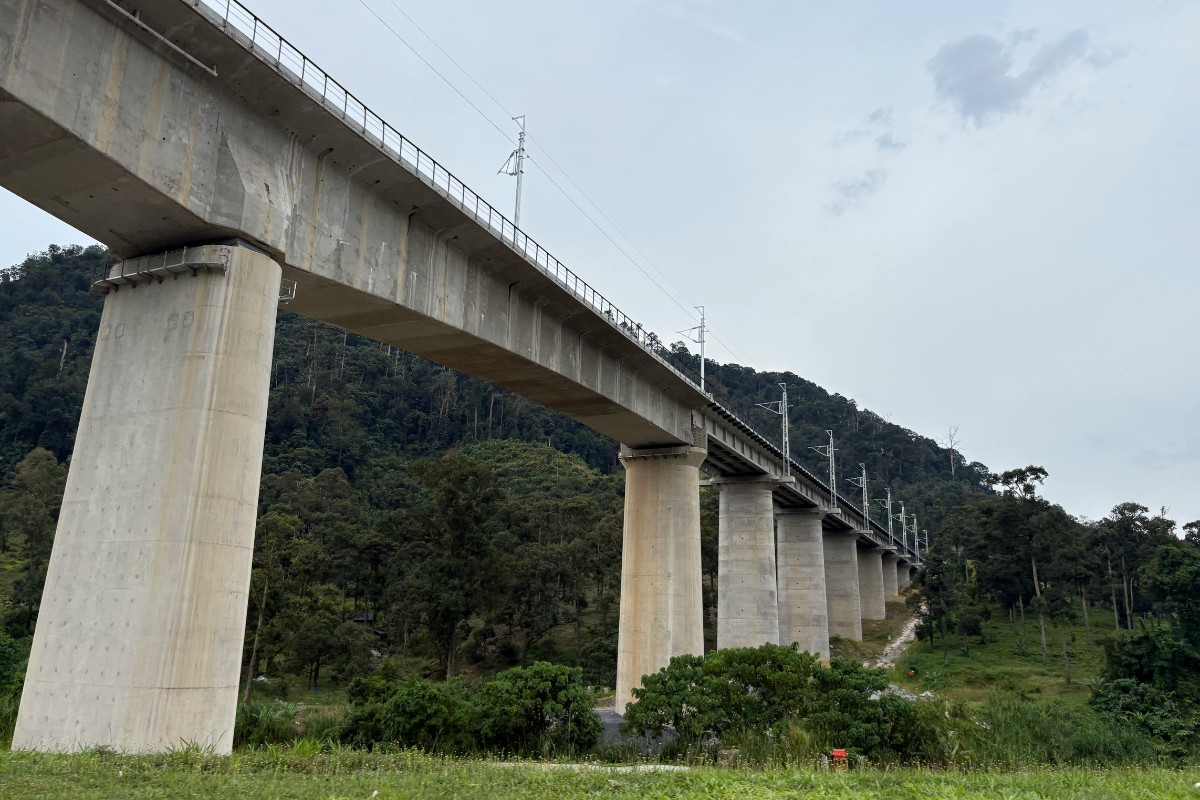
3Structural Health Monitoring of a Railway Bridge in Taiwan Using Distributed Fiber Optic Sensing
- ✔︎ Fiber optic cables installed along approximately 1 km of railway bridge for long-term, distributed monitoring of strain and displacement
- ✔︎ Applied not only to rapid post-earthquake safety assessment, but also to dynamic monitoring of bridge behavior during train passage using DAS
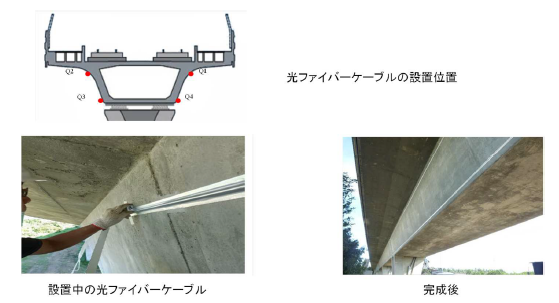
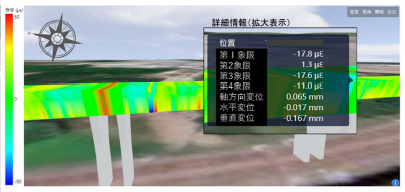
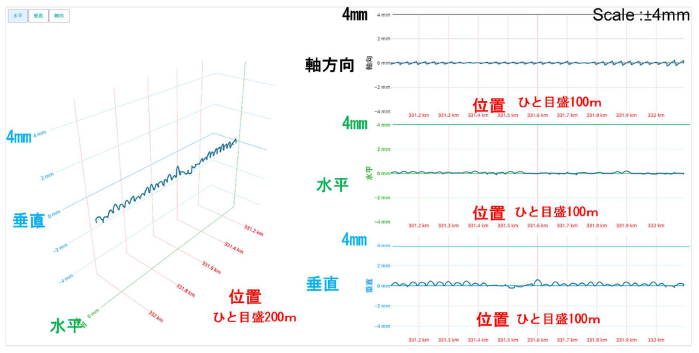
This case involved the installation of a distributed fiber optic sensing system along approximately 1 km of railway bridge in Taiwan for structural health monitoring. By installing fiber optic cables in four quadrants of the bridge girders, the system enabled calculation of not only axial strain but also horizontal and vertical bending displacement. The deformation of the entire monitored section and detailed measurement information at individual locations were visualized on a SCADA system. The monitored section extends 990 m across 33 spans, and continuous measurements have been conducted since September 2021.
Following earthquakes that occurred in eastern Taiwan in September 2022, the bridge was rapidly measured and analyzed immediately after the events, confirming that no significant structural changes had occurred. Dynamic measurements during train passage were also conducted using DAS, capturing train movement and speed, the locations of bridge expansion joints, and the vibration characteristics of the structure caused by passing trains. Combining long-term static monitoring with dynamic measurements is expected to enable more advanced structural health monitoring of railway infrastructure.
Source: JSCE Civil Engineering and Construction Technology Presentation 2024, IV-05 (November 2024), © Japan Society of Civil Engineers
Conference name and year shown in the PDF were added by Neubrex
